Das weltweite Magazin und der Marktplatz für Oldtimer-Enthusiasten – von Enthusiasten.




Der Markt; alle Post-War fahrzeuge zu verkaufen
Überblick ähnlicher Anzeigen 1991 Ferrari Testarossa
-

2015 JAGUAR F-TYPE S V6 QUICKSHIFT **SOLD**
**SOLD**Stand out in this beautiful ‘Italian Racing Red’ F-Type V6 S. Boasting contrasting Black convertible roof and 19’’ 10-spoke wheels, Black Pack and Winter Pack, not only does it look incredibly stylish, but its sportscar pedigree is authenticated with a 340bhp Supercharged V6.It has travelled just 23,000 miles from new with .. -
1969 Ferrari 365 GTB/4 Daytona
Debuted in 1968, the 365 GTB/4 succeeded the 275 GTB/4 as Ferrari’s top-of-the-line, two-seat gran turismo. Unofficially known as the Daytona – in honor of Ferrari’s podium sweep at the 24-hour race in 1967 – it stands as the last front-engine V-12 Berlinetta designed before Fiat’s takeover of Ferrari road car production. While utilizin.. -
1991 Citroën 2CV
The Citroën 2CV, or Deux Chevaux, so named for its fate as the replacement for a two-horse-drawn carriage, remains to this day an icon of France, akin to the Eiffel Tower. Despite the fact that over five million were produced between 1948 and 1990, the little automobile became the darling of all social strata, renowned for its economy, reliabili.. -
1959 Ferrari 250 GT LWB California Spider Competizione
The Ferrari 250 GT California Spider is, without question, among the most recognizable, admired, and collectible sports cars of all time. Developed at the behest of Ferrari’s West Coast representative John von Neumann and aimed at the all-important North American market, the California Spider was envisioned as an open-air counterpart to the dual.. -
1967 Ferrari 275 GTB/4
Unveiled at the Paris Motor Show in October 1966, the 275 GTB/4 was a groundbreaking Ferrari. As Maranello’s first four-cam road car, the GTB/4 paid homage to the dominant sports racing prototypes of the era and pointed to the future of Ferrari design. Subtly differentiated from the long-nose two-cam 275 GTB by a slight bulge on the bon.. -
1984 Ferrari 512 BBi
Introduced at the 1981 Frankfurt Motor Show in Germany, the Ferrari 512 BBi was a minor refresh of its predecessor, the 512 BB, with one notable exception – the addition of Bosch K-Jetronic fuel injection. Owners lauded the BBi’s refinement and driveability over the 512 BB, with easy starts, smooth acceleration, and 20 additional lbs./ft. of tor.. -
1973 Ferrari 365 GTB/4 Daytona
When Ferrari launched its brand-new 365 GTB/4 at the Paris Motor Show in 1968, the memory of Ferrari’s epic 1-2-3 win at the 24 Hours of Daytona the year before was fresh in the mind of the automotive world. Hence, the new car in the stable was dubbed “Daytona” in honor of that historic event – a name commonly used by all but Ferrari, which stil.. -
1979 Ferrari 512 BB
After years of rejecting the mid-engine road car concept, Enzo Ferrari ultimately capitulated as engine sizes increased and the configuration became more desirable. The design also aligned his passenger cars more closely with the F1 program. In 1971, Ferrari unveiled the 365 GT4 BB at the Torino Motor Show as the successor to the front-engine 36.. -
1984 Ferrari 512 BBi Koenig Special
Founded in 1977 by Willy König in Munich, Koenig Specials pushed the envelope of supercar performance and styling, gaining recognition worldwide for their outlandish creations. Koenig would tune any manner of Mercedes Benz, Porsche, or Ferrari, offering both styling and performance upgrades. As documented by an extensive history file, t.. -
1986 Ferrari Testarossa Koenig Special
Founded in 1977 by Willy König in Munich, Koenig Specials pushed the envelope of supercar performance and styling, gaining recognition worldwide for its outlandish creations. Koenig would tune any manner of Mercedes, Porsche, or Ferrari, and the Testarossa alone was available in varying forms with up to 1,000 hp in “Evolution” guise. As..


Ausgewählt
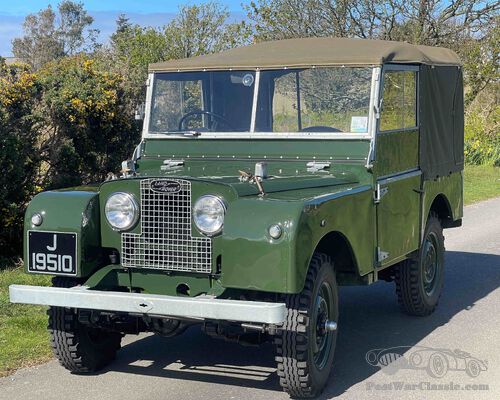
1952 Land Rover Series 1
Technische Daten:Marke und Modell: Land Rover Series !Baujahr: 1952Kennzeichen: Jersey-Zulassung
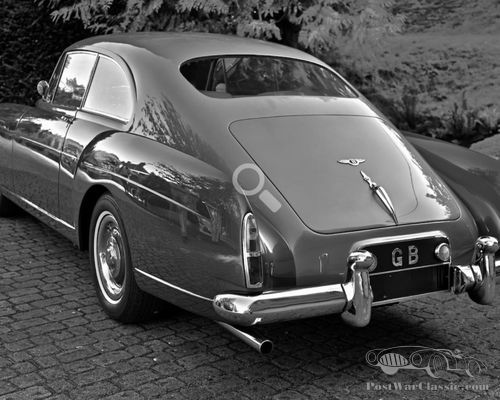
1957 Bentley S1 Fastback durch H.J. Mulliner.
1957 Bentley S1 Fastback by H.J. Mulliner.Frisch restauriertes und preisgekröntes Fahrzeug in neuwertigem Zustand. Es handelt sich um ein sp..
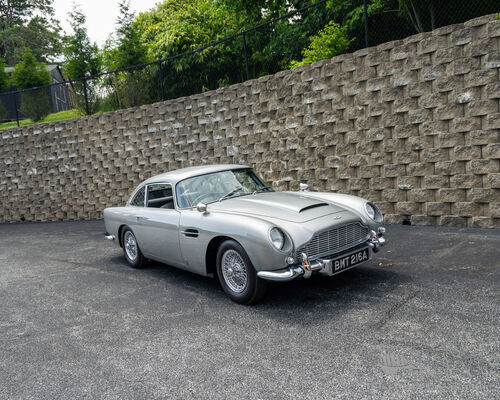
2020 Aston Martin DB5 Goldfinger Continuation
Angeboten bei RM Sotheby's, The Monterey Auction, 13.–15. August 2026. Schätzpreis: 1.000.000–1.500.000 USDEines von ledi..