Das weltweite Magazin und der Marktplatz für Oldtimer-Enthusiasten – von Enthusiasten.





Der Markt; alle Post-War fahrzeuge zu verkaufen
Überblick ähnlicher Anzeigen 1990 Ferrari F40 'Jean Sage' by Michelotto | RM Sotheby's | The Woodcote Park Auction
-

2003 Mercedes-Benz SL55 AMG | Mercedes-Benz World | Historics Auctioneers | 27th November 2021
The fifth generation of the legendary SL series of two-door convertible sports cars was known as the R230. It featured a fully retractable hardtop that was marketed as the Vario roof, a first for the SL Class although it had been available on the smaller SLK model since 1997. The flagship models were built by AMG in the form of the SL55 and SL65, b.. -
1989 BMW 635 CSi Highline | Mercedes-Benz World | Historics Auctioneers | 27th November 2021
Successor to the race proven E9 3.0CS/CSi, the BMW 6 Series was introduced in August 1976, it utilised a modified version of the 5 Series saloon platform equipped with all-round independent suspension and powerful disc brakes. A natural rival to the 928 and XJS, the four-seater 6 Series proved more capacious than the Porsche and sportier than the J.. -
1980 Porsche 911 / 930 Turbo with RUF upgrades | Mercedes-Benz World | Historics Auctioneers | 27th November 2021
In the early 1970's, Porsche had designs on racing a turbocharged version of the 911 and the Porsche 911 Turbo or 930 was born. It was the fastest production car available on the market. Adding this level of power to the already powerful car created a vehicle that was not for the faint hearted. In skilled hands, however, a 930 will show a clean pai.. -
1997 Mercedes-Benz SL320 | Mercedes-Benz World | Historics Auctioneers | 27th November 2021
Unveiled at the March 1989 Geneva Motor Show, the new Mercedes-Benz R129 Series SL range was beautifully engineered. Based around a two-door monocoque bodyshell, its sophisticated, all-round independent suspension (double-wishbone front/five-link rear) was augmented by a host of active and passive safety features including electronic stability cont.. -
1980 Mercedes-Benz 350SL | Mercedes-Benz World | Historics Auctioneers | 27th November 2021
Introduced early in 1971, this impressive two-seater sports car replaced the 280SL. The body and chassis of the 3rd generation SL was considerably heavier and longer than its predecessor but still showed a resemblance to them. The front and rear axles were like those of the 200-250 models with independent wheel suspension using double wishbones and.. -
1986 Porsche 911 Carrera Resto-mod | Mercedes-Benz World | Historics Auctioneers | 27th November 2021
The early days of this exquisite example are slightly academic. It went from Germany to Japan (import documents enclosed) and then back to the UK. The real story begins in 2011 when it arrived with the vendor. The Porsche marque was the designer’s personal passion and with an award-winning restoration team around him they wanted to prove a point wi.. -
1990 Mercedes-Benz 190E 2.5 16V Cosworth | Mercedes-Benz World | Historics Auctioneers | 27th November 2021
In 1983, Mercedes-Benz introduced the Cosworth 2.3 16V into their range and the new cars were substantially different from the other 190 models. The body kit reduced the drag coefficient and the steering wheel was smaller than that on other 190s, whilst the fuel tank was enlarged to 70 litres. The Getrag five-speed, manual gearbox was unique to the.. -
1980 Vauxhall Chevette LWB HSR Ex-Factory Works car. Group 4 specification | Mercedes-Benz World | Historics Auctioneers | 27th November 2021
In 1976, at the instigation of new chairman Bob Price, Vauxhall decided to increase their profile in international rallying. They developed a rally version of the Chevette in conjunction with Blydenstein Racing, which ran Dealer Team Vauxhall, the nearest equivalent to a 'works' (manufacturer run) competition team that GM policy would allow. In ord.. -
1986 Mercedes-Benz 560 SEC AMG Widebody 6.0 Litre Quad Cam | Mercedes-Benz World | Historics Auctioneers | 27th November 2021
Prior to its merger with Daimler AG, AMG was an independent tuner that was established in 1967 by Daimler-Benz engineers Hans Werner Aufrecht and Erhard Melcher (the G is for Grossaspach, Aufrecht’s birthplace). AMG would modify engines and sell performance accessories that customers could use to upgrade their Mercedes-Benz automobiles. By the 1980.. -
2000 Mercedes-Benz CL600 AMG | Mercedes-Benz World | Historics Auctioneers | 27th November 2021
The CL Class is the flagship of the Mercedes-Benz car range. It continued to follow the same development cycle as the S-Class, though riding on a shorter wheelbase and offered with only the higher-output powertrains. It was the first Mercedes to feature Active Body Control, Bi-Xenon headlights and, on the early V12 models such as this one, it emplo..


Ausgewählt
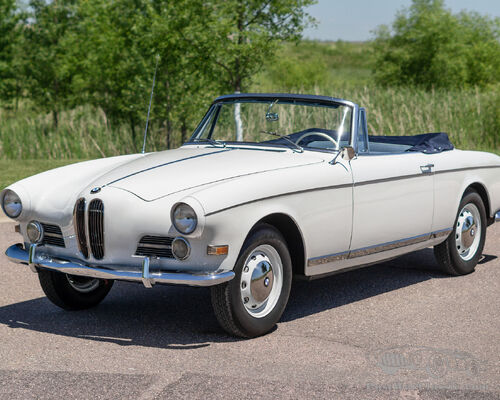
1957 BMW 503 Cabriolet (V8) – 1 von 13 für den US-Markt gebaut – #Matching Exemplar
1957 BMW 503 Cabriolet Serie 1Originaler Aluminium-V8 # MatchingOriginale Aluminiumkarosserie mit Werksprägungen1 von..
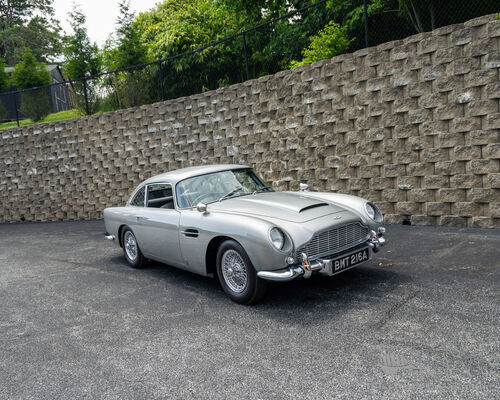
2020 Aston Martin DB5 Goldfinger Continuation | RM Sotheby's | The Monterey Auction
To Be OFFERED AT AUCTION at RM Sothebys' The Monterey Auction event, 13 - 15 August 2026. $1,000,000 - $1,500,000 USD One of 25 examples co..
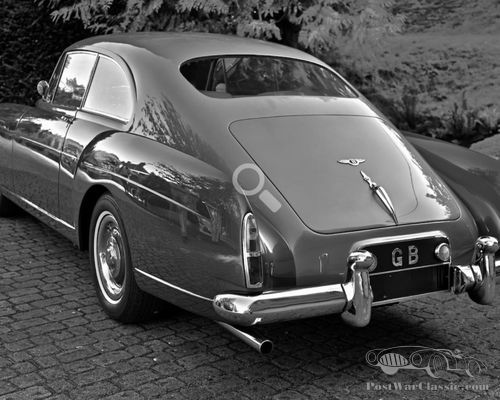
1957 Bentley S1 Fastback by H.J. Mulliner.
1957 Bentley S1 Fastback by H.J. Mulliner.A freshly restored award winning car in like new condition. A later car with Power assited steerin..