Das weltweite Magazin und der Marktplatz für Oldtimer-Enthusiasten – von Enthusiasten.





Der Markt; alle Post-War fahrzeuge zu verkaufen
Überblick ähnlicher Anzeigen 1976 Alfa Romeo Sports Coupé by Autotecnica del Lario | RM Sotheby's | The Woodcote Park Auction
-

1961 Daimler SP250 ‘Ex-Metropolitan Police’ | Bicester Heritage 23rd September 2023 Sale | Historics Auctioneers
In the late 1950s, the Metropolitan police had a major problem with café racer motorcyclists. Groups of youths on motorbikes would gather together at a local café, put a record on the jukebox and then race their bikes along a set course getting back to the café before the record had stopped playing. Accidents occurred and in an attempt to put a sto.. -
1967 Austin Mini Cooper S Mk. II | Bicester Heritage 23rd September 2023 Sale | Historics Auctioneers
We all know the history of the Mini and the significant part it played in the development of the world's motorcar industry. The accessibility it gave to the general public as well as its enormous success it had in competition, finding a good one though, I mean a properly good one these days, can be fraught with difficulty. This is, however, is one .. -
1968 Triumph TR5 | Bicester Heritage 23rd September 2023 Sale | Historics Auctioneers
The 1968 Triumph TR5 is an iconic British sports car that seamlessly blends timeless design with exhilarating performance. Powered by a 2.5 litre inline-six engine, it delivers 150 horsepower, offering a thrilling driving experience. Its distinctive Michelotti-penned bodywork features flowing lines and a classic British roadster profile, capturing .. -
1969 Triumph TR6 | Bicester Heritage 23rd September 2023 Sale | Historics Auctioneers
The Triumph TR6 was produced between 1969 and 1976 and, by the time production ended in July 1976, it was the best-seller of the TR range. In total 94,619 TR6s were manufactured of which 86,249 were sold overseas and only 8,370 were sold in the UK. The bodywork closely resembled that of the previous model, the TR5, but the front and rear were squar.. -
1963 Heinkel Trojan | Bicester Heritage 23rd September 2023 Sale | Historics Auctioneers
The cars were built in Croydon UK by Trojan to the design of the Heinkel Kabine and using the reliable Heinkel four-stroke 198 cc engine. The car was advertised as having a top speed of 56mph and achieving 95mph but probably not both at the same time! The design was inspired by the original Italian Isetta but is much lighter and the steering wheel .. -
1969 Austin Mini Cooper S | Bicester Heritage 23rd September 2023 Sale | Historics Auctioneers
The Austin Mini Cooper S Mk. II had a distinctive look that set it apart from other cars of its time. The car's handling was also exceptional, thanks to its front-wheel drive and nimble suspension system, making it a popular choice for racing enthusiasts. Overall, the Austin Mini Cooper S Mk. II was a car that was ahead of its time, offering impres.. -
1966 Jaguar E-Type Series I Roadster (4.2 litre) | Bicester Heritage 23rd September 2023 Sale | Historics Auctioneers
The Jaguar E-Type was manufactured between 1961 and 1975 and its combination of good looks, high performance and competitive pricing established the marque as an icon of 1960's motoring. A great success for Jaguar, more than 70,000 E-Types were sold during its lifespan. The Series I was introduced, initially for export only, in March 1961 with the.. -
1966 Aston Martin DB6 Vantage Mk. I | Bicester Heritage 23rd September 2023 Sale | Historics Auctioneers
The Aston Martin DB6 was launched at the London Motor Show in 1965, following on from the highly successful DB5, immortalised by the 1964 James Bond film 'Goldfinger'. The front of the DB6 was visually similar to the DB5 but closer inspection revealed quite a different car. The wheelbase was lengthened allowing additional passenger space in the rea.. -
1965 Alfa Romeo 2600 Touring Spider | Bicester Heritage 23rd September 2023 Sale | Historics Auctioneers
The Alfa Romeo 2600 (designated 106 series) was Alfa Romeo´s six-cylinder flagship model produced from 1962 through to 1968. It was the successor to the Alfa Romeo 2000 and has become historically significant as the last Alfa Romeo to have been fitted with an inline six-cylinder engine and having twin overhead camshafts which had been the tradition.. -
1966 Jaguar E-Type Series I 2+2 Semi-lightweight | Bicester Heritage 23rd September 2023 Sale | Historics Auctioneers
Launched at the 1961 Geneva Motor Show, the Jaguar E-Type was nothing short of a revelation. With its heady blend of supercar performance, breathtaking styling and low price tag, the newcomer left rivals reeling and customers clamouring. Early sportscar racing success at the hands of Graham Hill and Roy Salvadori amongst others helped cement its re..


Ausgewählt
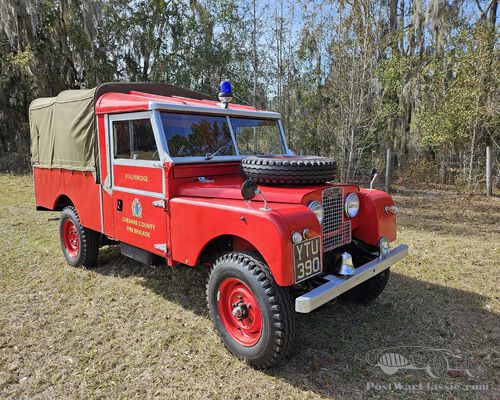
1957 Series 1 Land Rover Fire Engine + Coventry Climax Godiva Fire Pump
Betsy was used by Cheshire Fire Service (UK) from 1957 to 1975. She was based at Hazel Grove and Stalybridge Fire stations. She comes with an exten..
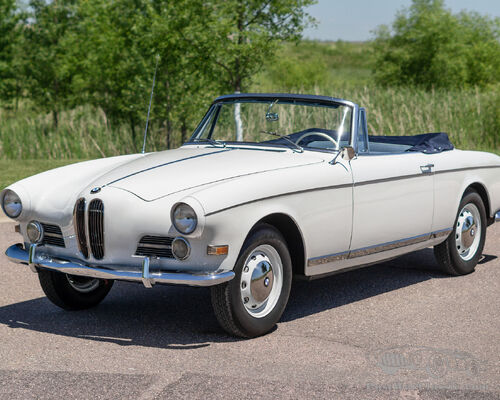
1957 BMW 503 Cabriolet (V8) – 1 von 13 für den US-Markt gebaut – #Matching Exemplar
1957 BMW 503 Cabriolet Serie 1Originaler Aluminium-V8 # MatchingOriginale Aluminiumkarosserie mit Werksprägungen1 von..