Das weltweite Magazin und der Marktplatz für Oldtimer-Enthusiasten – von Enthusiasten.





Der Markt; alle Post-War fahrzeuge zu verkaufen
Überblick ähnlicher Anzeigen 1976 Alfa Romeo Sports Coupé by Autotecnica del Lario | RM Sotheby's | The Woodcote Park Auction
-

1965 Citroën DS19 Majesty | Amelia Island Auction | Gooding & Company | March 1, 2024
As early as 1958, Henri Chapron began purchasing complete DS models directly from Citroën, as required, to create special coachwork for them. One variant, the Majesty, featured a higher and more angular roofline than the factory DS, similar to the Concorde, providing increased headroom for the rear passengers and greater interior space. Its purp.. -
1963 Citroën DS19 Concorde | Amelia Island Auction | Gooding & Company | March 1, 2024
In 1955, Citroën introduced the revolutionary DS19 sedan. Despite new coachbuilt cars being few and far between at that time, Henri Chapron made body modifications to a DS19 in 1958, without the endorsement of Citroën. Chapron’s name was synonymous with exquisite coachwork of French marques including Delahaye, Talbot-Lago, and Delage throughout .. -
1963 Citroën DS19 Le Dandy | Amelia Island Auction | Gooding & Company | March 1, 2024
Henri Chapron was a prominent Parisian coachbuilder of Art Deco-style automobiles in the 1930s. Following WWII, the need for such coachwork was diminishing. In 1958, with the introduction of the new Citroën DS, Chapron decided to create hand-built custom bodies without the support of Citroën. Chapron was initially required to purchase complete c.. -
1966 Citroën DS21 Le Leman | Amelia Island Auction | Gooding & Company | March 1, 2024
Following the revolutionary DS19 introduced at the Paris Motor Show in October 1955, Citroën created a successor to the model with the DS21. The 21 improved on the 19 with an increase in power from 75 to 125 hp. Both featured hydropneumatic suspension, allowing the vehicle to operate while balanced on three wheels if necessary. Until the 1950s, .. -
1961 Porsche RS61 | Amelia Island Auction | Gooding & Company | March 1, 2024
Unveiled in January 1960, the RS60 represented the ultimate evolution of Porsche’s aluminum-bodied, four-cam Spyder – an iconic series of sports racing cars originating with the Type 550 in 1953. The RS60 was, in essence, a refined version of the highly successful works RSK built for the 1959 racing season. While the RS60 maintained the.. -
1963 Alfa Romeo 2600 Spider | Amelia Island Auction | Gooding & Company | March 1, 2024
Debuted at Geneva in 1962, Alfa Romeo’s 2600 was the storied Italian marque’s flagship model line through 1967. It was available in three body styles: a four-door Berlina with factory bodywork, a Bertone-bodied coupe called the Sprint, and a 2+2 Spider featuring Superleggera (Super light) coachwork by Touring. Delivering a wonderful ble.. -
1960 Alfa Romeo Giulietta SZ | Amelia Island Auction | Gooding & Company | March 1, 2024
In 1956, when a wrecked Sprint Veloce was taken to Elio Zagato for new coachwork, a remarkable transformation took place. By fitting a lighter, more aerodynamic body to the already potent Giulietta Veloce, Zagato created an Alfa Romeo that could rival cars of far greater displacement. Other Sprint Veloce owners soon followed suit and, after witn.. -
1961 Maserati 3500 GT | Amelia Island Auction | Gooding & Company | March 1, 2024
Designed by Giulio Alfieri and bodied by Touring, the 3500 GT was a luxury 2+2 coupe that benefited heavily from Maserati’s previous racing experience. Beneath its elegantly styled Superleggera (Super light) body, consisting of a steel frame wrapped in aluminum panels, sat a tubular chassis and a DOHC inline six-cylinder engine derived .. -
1967 Ferrari 275 GTB/4 | Amelia Island Auction | Gooding & Company | March 1, 2024
“I like fast cars. I like the competition. You must like all that is involved in motor racing because it is a hard sport. When I’m driving, I must pass all cars. Ferrari or Porsche, my own team, it’s all the same – I must pass. Even if the chief of the team is not always happy. It is good to be part of a strong team, it makes you drive faster st.. -
1957 Alfa Romeo Giulietta Spider | Amelia Island Auction | Gooding & Company | March 1, 2024
In the mid-1950s, enthusiasts who were considering purchasing a small, open sports car found themselves presented with a compelling new choice: Alfa Romeo’s Giulietta Spider. It featured gorgeous Pinin Farina styling, twin overhead-cam alloy engine, outstanding ride quality, and weather protection equal to that of more expensive sports cars. Tod..


Ausgewählt
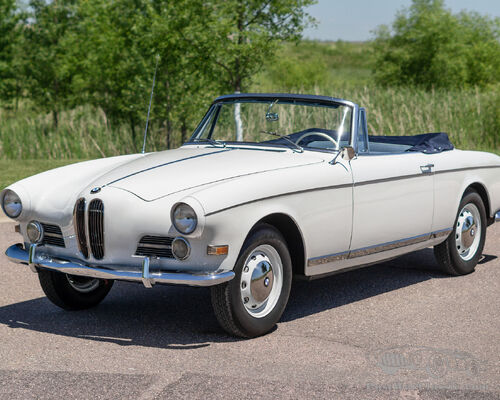
1957 BMW 503 Cabriolet (V8) – 1 von 13 für den US-Markt gebaut – #Matching Exemplar
1957 BMW 503 Cabriolet Serie 1Originaler Aluminium-V8 # MatchingOriginale Aluminiumkarosserie mit Werksprägungen1 von..
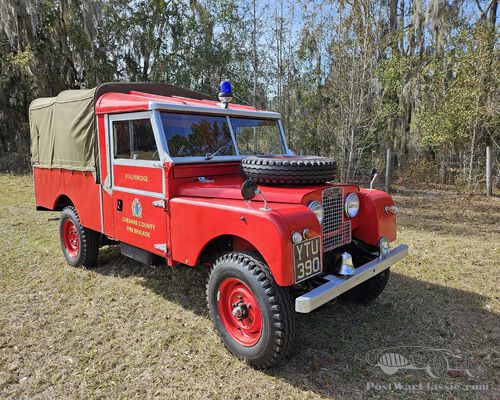
1957 Series 1 Land Rover Fire Engine + Coventry Climax Godiva Fire Pump
Betsy was used by Cheshire Fire Service (UK) from 1957 to 1975. She was based at Hazel Grove and Stalybridge Fire stations. She comes with an exten..