Das weltweite Magazin und der Marktplatz für Oldtimer-Enthusiasten – von Enthusiasten.





Der Markt; alle Post-War fahrzeuge zu verkaufen
Überblick ähnlicher Anzeigen 1970 Mini 850 - TÜV neu - seltene Spanien Version - fahrbereit
-

1977 Chevrolet IROC Camaro | Amelia Island 2022 | Gooding & Co | March 4
Pitting 12 of the era’s most competitive drivers from disciplines including Formula 1, SCCA, IMSA, and NASCAR, the original IROC (International Race of Champions) series debuted to a huge audience on ABC Television’s Wide World of Sports on October 27, 1973. Featuring identically prepared cars, the IROC series was organized by the top r.. -
1974 De Tomaso Pantera L | Amelia Island 2022 | Gooding & Co | March 4
Launched in 1970, the De Tomaso Pantera combined Italian styling with the power of an American-made V-8 engine. With wedge styling credited to Tom Tjaarda of Ghia, and a steel unibody monocoque chassis devised by former Lamborghini engineer Gian Paolo Dallara, final assembly transpired at Ghia’s factory in Vignale, Italy. Early impressions were .. -
1975 Porsche 930 | Amelia Island 2022 | Gooding & Co | March 4
Following its domination of the Can-Am racing series in 1972 and 1973, Porsche used its experience with turbocharging technology gained from motor sports for serial sports car production. Introduced at the 1974 Paris Motor Show, the Type 930 was distinguished by a 3.0-liter turbocharged flat-six engine, flared wheel arches, uprated suspension, a.. -
1973 Porsche 911 Carrera RS 2.7 Lightweight | Amelia Island 2022 | Gooding & Co | March 4
Although Porsche had reached the pinnacle of international motor sports by sweeping the FIA World Sportscar Championship for three years beginning in 1970, FIA rule changes after 1972 rendered the marque’s fearsome 917 sports prototypes obsolete. It was then that a new “works” competition program aimed at the Group 4 GT class commenced at Porsch.. -
1977 Porsche 930 | Amelia Island 2022 | Gooding & Co | March 4
For 1976, Porsche introduced the 930 to the US market, bearing the “Turbo Carrera” nameplate underneath its distinctive whale tail. Featuring a 3.0-liter flat-six, it utilizes a single KKK turbocharger, pushing out 256 bhp. Following its success in 1976, Porsche revised key details for the 1977 model year, including adding power brakes, 16” Fuch.. -
1973 Porsche 911 T | Amelia Island 2022 | Gooding & Co | March 4
Porsche debuted the 911 series in 1964 after the long and successful run of the 356. Instead of a 4-cylinder, the new model featured a 2-liter air-cooled flat-six and was smoother, more powerful, and quieter than the outgoing 356. Since then, the timeless design of the 911 has been built upon year after year. By 1973, the 911 had been f.. -
1971 BMW 2002 tii Touring | Amelia Island 2022 | Gooding & Co | March 4
The BMW 02 Series is well known worldwide as a revolutionary model that changed the landscape for small luxury sport coupes. Long the purview of the Porsche and Alfa Romeo, this class of automobile became incredibly popular in the 1960s, and BMW’s tasteful design resonated with a youthful subset of professionals that prized brand recognition, st.. -
1974 Porsche 911 Carrera 3.0 RSR IROC | Amelia Island 2022 | Gooding & Co | March 4
In 1973, Roger Penske created a racing series called the International Race of Champions – or IROC. Equally ambitious and unique in concept, the IROC series aimed to place the world’s best racing drivers in identical cars to compete against each other over several rounds at leading US venues. To compete in his special racing series, Pen.. -
1977 Porsche 934/5 | Amelia Island 2022 | Gooding & Co | March 4
Developed during the mid-1970s under Wolfgang Berger and Norbert Singer, Porsche’s 934 was the raucous FIA-homologated Group 4 racing version of the turbocharged 930 road car. Given the importance of racing success in America to sales, the 934 prototype was submitted for inspection by IMSA’s John Bishop for inclusion into the Camel GT series in .. -
1974 Porsche 911 Carrera 3.0 RSR | Amelia Island 2022 | Gooding & Co | March 4
For the 1974 racing season, Porsche significantly improved the original RSR platform and offered a revised, road-going Carrera 3.0 RS. With a new type 911/75 engine, the 3.0 RSR boasted 330 bhp and weighed just 950 kg. The new model featured four-piston 917-type brakes, magnesium center-lock wheels, slide-valve mechanical fuel injection, a remot..


Ausgewählt
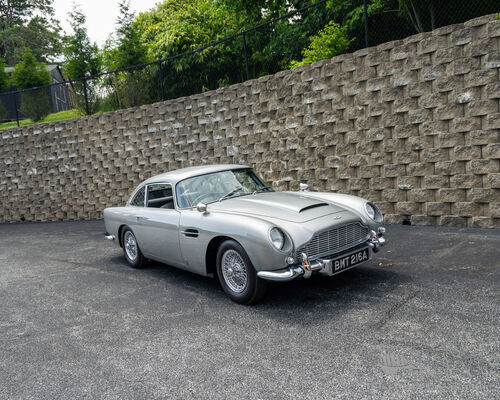
2020 Aston Martin DB5 Goldfinger Continuation
Angeboten bei RM Sotheby's, The Monterey Auction, 13.–15. August 2026. Schätzpreis: 1.000.000–1.500.000 USDEines von ledi..
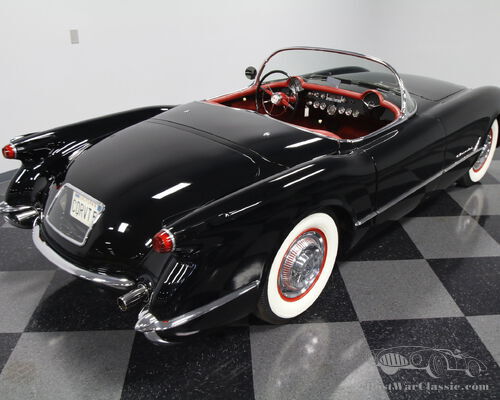
1954 Chevrolet Corvette C1
Fully restored 1954 C1 Corvette in Black. Stunningly beautiful car, feels like driving a sculptural work of Art. Known to be the oldest Corvette on t..
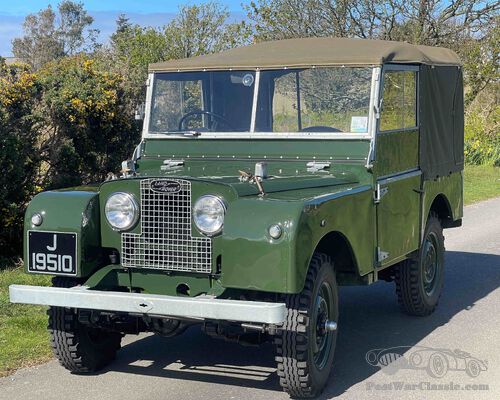
1952 Land Rover Series 1
Technische Daten:Marke und Modell: Land Rover Series !Baujahr: 1952Kennzeichen: Jersey-Zulassung