Das weltweite Magazin und der Marktplatz für Oldtimer-Enthusiasten – von Enthusiasten.





Der Markt; alle Post-War fahrzeuge zu verkaufen
Überblick ähnlicher Anzeigen 1963 Fiat 850 ABARTH
-

1966 Shelby 427 S/C Cobra | The Amelia Auction 2024 | Broad Arrow Auctions
Offered from the Racer X Collection One of just 31 427 Semi-Competition Cobras produced and one of only 316 big block cars constructed in total Highly original 427 S/C, boasting its original body, engine, and drivetrain Just five recorded owners from new, including collectors Peter Briggs and Chip Connor Exquisitely restored by .. -
1964 Autobianchi Bianchina Cabriolet | The Amelia Auction 2024 | Broad Arrow Auctions
Chassis No. 005265 Italian automaker Autobianchi was founded in 1955 as a joint venture between Pirelli, Fiat, and Bianchi –a bicycle manufacturer founded in 1885 and named for its founder Edoardo Bianchi. The goal was to produce small and stylish microcars for post-war Italy, while also acting as a testbed for parent company Fiat to develop.. -
1961 Ferrari 250 GTE | Amelia Island Auction | Gooding & Company | March 1, 2024
At the height of Ferrari’s sports car racing dominance, the 250 GTE was Maranello’s first four-seat road car and is largely credited with financing Ferrari’s racing program. Built to be a luxurious grand tourer, its architecture was based on the 250 GT LWB. To accommodate four passengers, the 240 hp V-12 engine and four-speed overdrive gearbox w.. -
1964 Porsche 356 C Cabriolet | Amelia Island Auction | Gooding & Company | March 1, 2024
Porsche’s basic 356 design was constantly refined and updated, culminating in the fantastic 356 C which debuted in July 1963. Select mechanical advancements included standard four-wheel disc brakes and new 15" wheels as well as deeper reclining bucket seats that were fitted courtesy of Reutter, which owned a subsidiary that would become Recaro. .. -
1961 Aston Martin DB4 Series II | Amelia Island Auction | Gooding & Company | March 1, 2024
Making its debut at the 1958 Paris Motor Show, the DB4 was a masterpiece of modern engineering for the small but highly respected Newport Pagnell firm. With styling by Carrozzeria Touring of Milan, the coachwork was constructed using their ingenious Superleggera (Super light) method of aluminum panels over a lightweight tubular framewor.. -
1965 Citroën DS19 Majesty | Amelia Island Auction | Gooding & Company | March 1, 2024
As early as 1958, Henri Chapron began purchasing complete DS models directly from Citroën, as required, to create special coachwork for them. One variant, the Majesty, featured a higher and more angular roofline than the factory DS, similar to the Concorde, providing increased headroom for the rear passengers and greater interior space. Its purp.. -
1963 Citroën DS19 Concorde | Amelia Island Auction | Gooding & Company | March 1, 2024
In 1955, Citroën introduced the revolutionary DS19 sedan. Despite new coachbuilt cars being few and far between at that time, Henri Chapron made body modifications to a DS19 in 1958, without the endorsement of Citroën. Chapron’s name was synonymous with exquisite coachwork of French marques including Delahaye, Talbot-Lago, and Delage throughout .. -
1963 Citroën DS19 Le Dandy | Amelia Island Auction | Gooding & Company | March 1, 2024
Henri Chapron was a prominent Parisian coachbuilder of Art Deco-style automobiles in the 1930s. Following WWII, the need for such coachwork was diminishing. In 1958, with the introduction of the new Citroën DS, Chapron decided to create hand-built custom bodies without the support of Citroën. Chapron was initially required to purchase complete c.. -
1966 Citroën DS21 Le Leman | Amelia Island Auction | Gooding & Company | March 1, 2024
Following the revolutionary DS19 introduced at the Paris Motor Show in October 1955, Citroën created a successor to the model with the DS21. The 21 improved on the 19 with an increase in power from 75 to 125 hp. Both featured hydropneumatic suspension, allowing the vehicle to operate while balanced on three wheels if necessary. Until the 1950s, .. -
1961 Porsche RS61 | Amelia Island Auction | Gooding & Company | March 1, 2024
Unveiled in January 1960, the RS60 represented the ultimate evolution of Porsche’s aluminum-bodied, four-cam Spyder – an iconic series of sports racing cars originating with the Type 550 in 1953. The RS60 was, in essence, a refined version of the highly successful works RSK built for the 1959 racing season. While the RS60 maintained the..


Ausgewählt
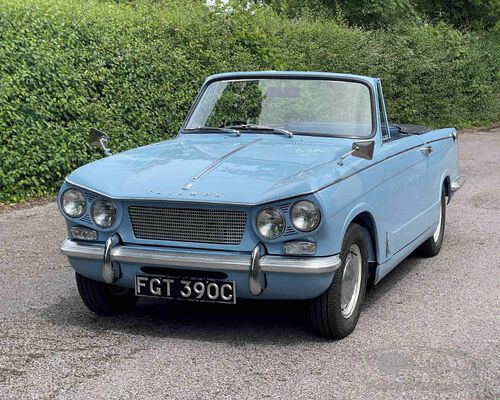
Triumph Vitesse 6 Convertible
Technische DatenMarke & Modell: Triumph Vitesse 6 ConvertibleBaujahr: 1965Zulassung: GroßbritannienFahrgeste..
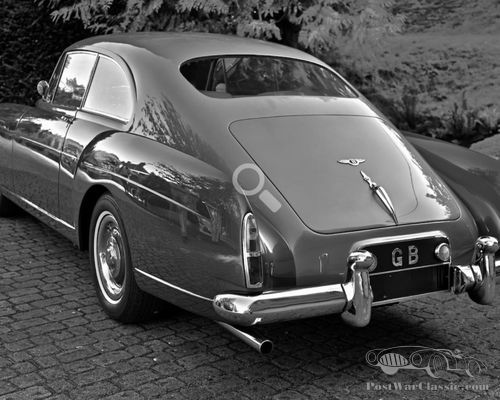
1957 Bentley S1 Fastback durch H.J. Mulliner.
1957 Bentley S1 Fastback by H.J. Mulliner.Frisch restauriertes und preisgekröntes Fahrzeug in neuwertigem Zustand. Es handelt sich um ein sp..
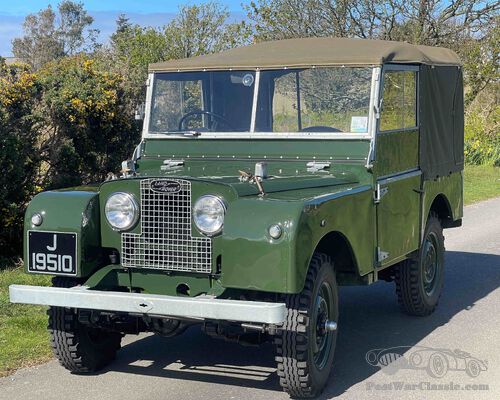
1952 Land Rover Series 1
Technische Daten:Marke und Modell: Land Rover Series !Baujahr: 1952Kennzeichen: Jersey-Zulassung