Das weltweite Magazin und der Marktplatz für Oldtimer-Enthusiasten – von Enthusiasten.





Der Markt; alle Post-War fahrzeuge zu verkaufen
Überblick ähnlicher Anzeigen 1955 Aston Martin DB2/4 MK1
-

1998 Aston Martin V8 Volante Long Wheelbase | Mercedes Benz Worlds Brooklands sale - November 2023 | Historics Auctioneers
The Aston Martin Volante LWB is a classic convertible that is known for its elegant design and luxurious features. The LWB (Long Wheelbase) model was introduced in 1996 and was designed to provide more legroom for rear passengers. It was based on the DB7 platform and was produced until 2003. The exterior of the Volante LWB is timeless and sophistic.. -
2002 Aston Martin DB7 Vantage Volante | Mercedes Benz Worlds Brooklands sale - November 2023 | Historics Auctioneers
Completed in the November of 1992 the prototype for the DB7 was unveiled at the Geneva Motor Show in March 1993. The DB7 was engineered in Kidlington, Oxfordshire, by Tom Walkinshaw Racing on behalf of Aston Martin. The engines continued to be built in Kidlington during the production run of the vehicle. In March 1999 a totally revised DB7 Vantage .. -
2001 Aston Martin DB7 Vantage | Mercedes Benz Worlds Brooklands sale - November 2023 | Historics Auctioneers
Launched at the Geneva Motor Show in 1993, the Ian Callum styled DB7 began production in 1994 at a new factory in Bloxham, Oxfordshire. It was engineered in conjunction with Tom Walkinshaw’s TWR group who built the new supercharged six-cylinder engine. In 1999, the new DB7 Vantage with a V12 engine was revealed. It didn’t just bring a new powertrai.. -
1955 Lotus Mk. VI | Mercedes Benz Worlds Brooklands sale - November 2023 | Historics Auctioneers
Noted driver and motoring writer, Andrew Willis, called this example, “the original thoroughbred racer” going on to say that it was entirely representative of the late, great Colin Chapman’s ethos who was behind the sprightly design and, like most early Lotus models, his hand is very much evident when you take a walk around this racetrack weapon.. -
1968 Aston Martin DB6 Mk. I | Mercedes Benz Worlds Brooklands sale - November 2023 | Historics Auctioneers
Obviously the DB6 is a more advanced version of Aston's DB5 to include more wind-tunnel development, improved airflow through the air oil cooler as well as a few more external styling cues such as the bumpers. Mechanically, the engine was similar with three SU carburettors fitted as standard as well as a number of items that a customer could specif.. -
1955 Land Rover Series I (86”) | Mercedes Benz Worlds Brooklands sale - November 2023 | Historics Auctioneers
Originally registered in 1955 to the Halesowen Engineering Company who converted vehicles for military contracts, it then began life as a Column Commander’s vehicle for the British Army whose job it was to lay communications cables across strategic territories. It eventually left the MoD before being restored in 2018. It was stripped and rebuilt.. -
1956 Rolls-Royce Silver Cloud I | Mercedes Benz Worlds Brooklands sale - November 2023 | Historics Auctioneers
The Rolls-Royce Silver Cloud was the core model of the Rolls-Royce Motor Cars range from April 1955 until March 1966. It replaced the Silver Dawn and was, in turn, replaced by the Silver Shadow. The J.P. Blatchley design was a major change from the pre-war models and the highly derivative Silver Dawn. As part of a range rationalisation, the Bentley.. -
1958 Bentley S1 | Mercedes Benz Worlds Brooklands sale - November 2023 | Historics Auctioneers
Successor to the R-Type, the Bentley S1 was introduced in 1955 with a whole new chassis; the car's wheelbase had been extended three inches to 123”, and the luggage compartment was expanded. The S1 had softer suspension than the R-Type, with electrically controlled rear shock absorbers. Brakes had been improved, and the steering was lighter, even m.. -
1957 Jaguar Mk. VIII | Mercedes Benz Worlds Brooklands sale - November 2023 | Historics Auctioneers
The Jaguar Mk. VIII was introduced at the 1956 London Motor Show and shared its ten-foot wheelbase with its predecessor, the Jaguar Mk. VII, which outwardly it closely resembled. However, the interior fittings were more luxurious than those of the Mk. VII. Distinguishing visually between the models is facilitated by changes to the front grille, the.. -
1957 Aston Martin DB2/4 Mk. II | Mercedes Benz Worlds Brooklands sale - November 2023 | Historics Auctioneers
Registered new on 12th August 1957, this rare Aston Martin DB2/4 Mk. II was coachbuilt by Tickford and was delivered new to a gentleman in London in its original colour combination of black over a beige interior. Having passed through the hands of various other owners the DB2/4 was later acquired on 20th May 1966 by our vendors late father, Doctor ..


Ausgewählt
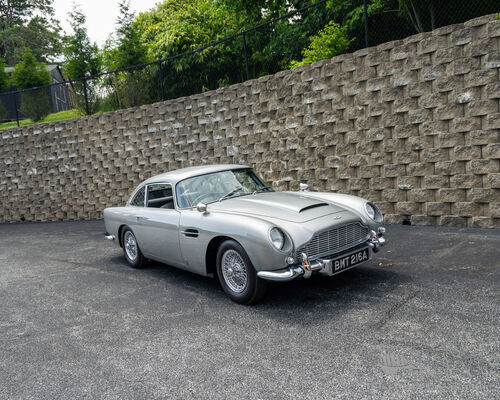
2020 Aston Martin DB5 Goldfinger Continuation
Angeboten bei RM Sotheby's, The Monterey Auction, 13.–15. August 2026. Schätzpreis: 1.000.000–1.500.000 USDEines von ledi..
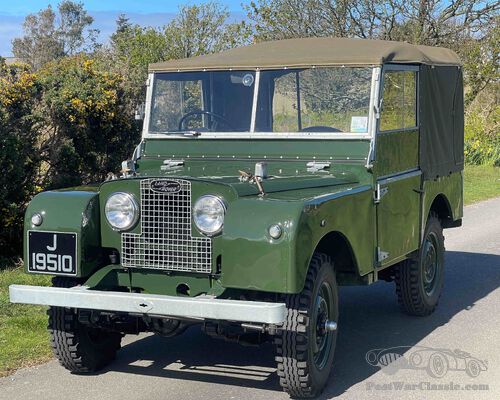
1952 Land Rover Series 1
Technische Daten:Marke und Modell: Land Rover Series !Baujahr: 1952Kennzeichen: Jersey-Zulassung
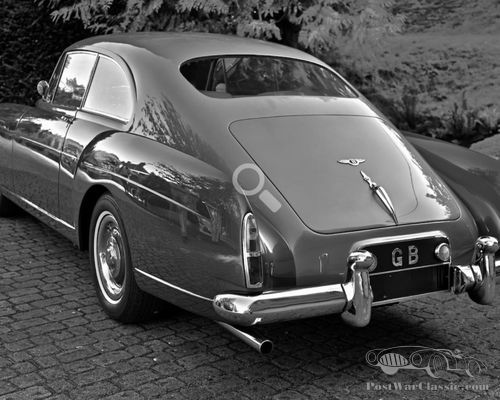
1957 Bentley S1 Fastback durch H.J. Mulliner.
1957 Bentley S1 Fastback by H.J. Mulliner.Frisch restauriertes und preisgekröntes Fahrzeug in neuwertigem Zustand. Es handelt sich um ein sp..