Das weltweite Magazin und der Marktplatz für Oldtimer-Enthusiasten – von Enthusiasten.





Der Markt; alle Post-War fahrzeuge zu verkaufen
Überblick ähnlicher Anzeigen MGB GT Limited Edition
-

2002 Renault Avantime Privilege | Historics Auctioneers
With design ahead of its time, this flagship boasted luxuries galore including a multitude of safety features and advanced engineering. Highlights included unique double-hinged pillarless doors allowing easy access to the front and rear seats even when tightly parked, the world's largest opening glass sunroof at the time featuring strengthened heat.. -
1987 Mercedes-Benz 300E | Historics Auctioneers
W124 is the Mercedes-Benz internal chassis designation reference for the 1985 to 1995 version of the Mercedes-Benz E-Class. Due to the high cost of German engineering and build quality, the model was designed to last many miles with awards won by high mileage versions. Front suspension is by way of a separate spring and damper whilst rear suspensio.. -
1991 Mercedes-Benz 190E | Historics Auctioneers
The W201 was a revolutionary model for Mercedes-Benz featuring, as it did, a patented rear five-link suspension subsequently used in E and C class models, front and rear anti-roll bars, anti-dive and anti-squat geometry as well as available airbags, ABS brakes and seatbelt pre-tensioners. Mercedes-Benz spent over £600 million researching and develo.. -
1984 Nissan Silvia | Historics Auctioneers
The ‘Silvia’ name is a variation of the word ‘sylvia’, which is a scientific genus term assigned to a class of birds, possibly a reference to the Bluebird which was in production at the time the Silvia was introduced. The S12 chassis in Europe was badged as a Silvia and available only in the hatchback configuration, few were equipped with a rally p.. -
2000 Mercedes-Benz CLK 230 Kompressor | Historics Auctioneers
Historically, the E-Class is Mercedes-Benz' best-selling model, with more than 13 million sold by 2015. The first E-Class series was originally available as a four-door saloon, five-door estate, two-door coupé and two-door convertible. From 1997 to 2009, the equivalent coupé and convertible were sold under the Mercedes-Benz CLK-Class nameplate; whi.. -
1990 Mercedes-Benz 560 SEL | Historics Auctioneers
The Mercedes-Benz W126 model was the successor to the earlier W116 line and the second generation of the Mercedes-Benz flagship to officially bear the S-Class name meaning Sonderklasse or 'special class'. The model range also introduced many Mercedes-Benz safety innovations, including the first airbag (supplemental restraint systems), seatbelt pre-.. -
2007 Smart Fortwo Convertible Brabus Red Edition | Historics Auctioneers
The Smart design concept began at Mercedes-Benz in the early 70s and late 80s. After brief backing by Volkswagen, the first model was released by Daimler-Benz in October 1998. Designed on the base of the Fortwo Brabus, this limited-edition example can be distinguished by its bright Intense Red colour and is powered by a 75bhp, three-cylinder turbo .. -
1997 Mercedes-Benz E220 Cabriolet | Historics Auctioneers
Mercedes-Benz introduced the 'E-Class' to the market in 1985 with the cabriolet version available from 1991. Much of the W124's engineering and many of its features were advanced automotive technology incorporating innovations that have been adopted throughout the industry. It had one of the lowest drag coefficients of any vehicle at the time, due .. -
1986 Porsche 928 S2 | Historics Auctioneers
The Porsche 928 was a sports GT sold from 1978 to 1995 and originally intended to replace the iconic 911, the 928 attempted to combine the power, poise and handling of a sports car with the refinement, comfort and equipment of a luxury coupé creating, what some Porsche executives thought would be, a more appealing vehicle than the compact and quirk.. -
1954 MG TF | Historics Auctioneers
Originally launched at the 1953 Motor Show, the MG TF was greeted with mixed reactions from enthusiasts and journalists alike. To the Abingdon engineers, led by Cecil Cousins, it was a model that was sufficiently different from its predecessors and yet continued the traditional T-Series classic lines and the end result was very pleasing to the eye...


Ausgewählt
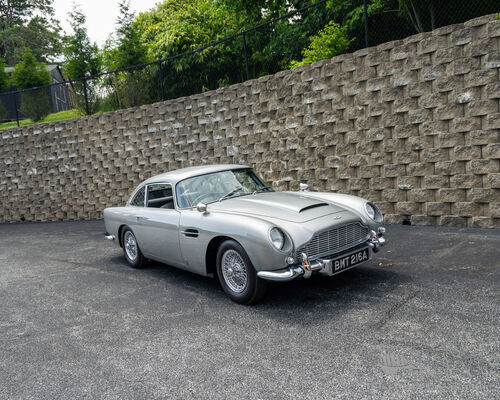
2020 Aston Martin DB5 Goldfinger Continuation
Angeboten bei RM Sotheby's, The Monterey Auction, 13.–15. August 2026. Schätzpreis: 1.000.000–1.500.000 USDEines von ledi..
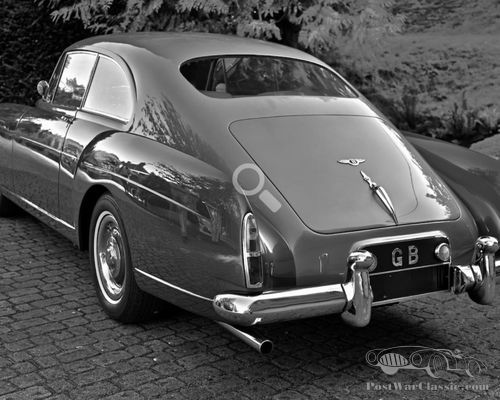
1957 Bentley S1 Fastback durch H.J. Mulliner.
1957 Bentley S1 Fastback by H.J. Mulliner.Frisch restauriertes und preisgekröntes Fahrzeug in neuwertigem Zustand. Es handelt sich um ein sp..
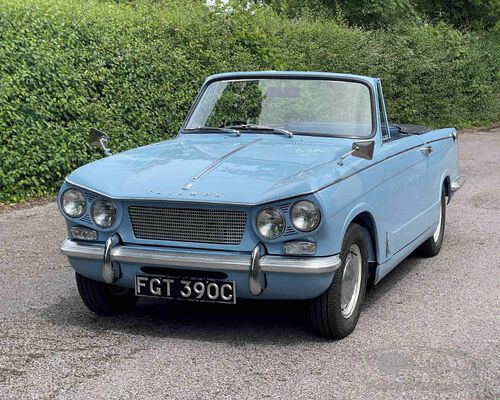
Triumph Vitesse 6 Convertible
Technische DatenMarke & Modell: Triumph Vitesse 6 ConvertibleBaujahr: 1965Zulassung: GroßbritannienFahrgeste..