Das weltweite Magazin und der Marktplatz für Oldtimer-Enthusiasten – von Enthusiasten.





Der Markt; alle Post-War fahrzeuge zu verkaufen
Überblick ähnlicher Anzeigen Morgan Plus 4
-

2013 BMW M3 Lime Rock Park Edition | Amelia Island 2022 | Gooding & Co | March 4
During development of the E90/92 variant of the M3, BMW’s Motorsport department weighed its options for a powertrain. It was necessary for the new car to have markedly higher power output than the outgoing E46 model, but without sacrificing weight. It landed on designing an all-new aluminum V-8 displacing four litres and producing 414 hp while r.. -
1995 BMW M3 | Amelia Island 2022 | Gooding & Co | March 4
For BMW, it was a daunting task to follow the success of the E30 M3. In 1992, a new M3 was introduced based on the E36 platform and it was immediately recognizable as an M-car. The performance of the new M3 surpassed its predecessor in every measurable way, and period road tests raved about the BMW’s value when compared against cars with similar.. -
1990 Porsche 964 Carrera 4 | Amelia Island 2022 | Gooding & Co | March 4
Introduced for the 1989 model year, the 964 was the third generation of Porsche’s perennial sports car. While appearing similar to its predecessor, Porsche claimed the 964 was 85% new, retaining little from the long-lived G series besides its classic silhouette. Aerodynamic front and rear bumpers and an automatically extending rear spoiler were .. -
1988 BMW M3 | Amelia Island 2022 | Gooding & Co | March 4
Built on its basic but dynamically superior E30 chassis, BMW developed the M3 to compete with Mercedes-Benz in various forms of motor sports, including touring car racing and rallying. Helping to differentiate it from the standard E30 coupe were unique bodywork featuring boxed fender flares and a rear wing, and most importantly, the S14 DOHC fou.. -
1996 Porsche 993 Carrera 4S | Amelia Island 2022 | Gooding & Co | March 4
Unveiled at the September 1993 Frankfurt Motor Show, the 993 was Porsche’s last air-cooled 911. While preserving many elements of the classic 911 silhouette, the new Tony Hatter-penned design was considered revolutionary, rather than evolutionary, from its predecessors in terms of performance, handling, comfort, and safety. Starting with the 199.. -
1998 Porsche 993 Carrera 4S | Amelia Island 2022 | Gooding & Co | March 4
Launched in late 1993 and on sale shortly thereafter, the Porsche 993 was the last 911 to use an air-cooled engine. A significant advance both visually and technically, the 993 was stated to be 80% new, sharing only a roof and front lid with its 964 predecessor. Per Porsche custom, the list of 993 variants was extensive and included a 4S model t.. -
2008 Porsche 997 Carrera S | Amelia Island 2022 | Gooding & Co | March 4
Launched in 2005, the 997 represented a significant overhaul of the Porsche 911 range. Utilizing much of its predecessor’s underlying platform, the 997 was distinguished via more traditional aesthetics including upright, oval headlights and a richer, quieter cabin. Drivers desiring more performance could step up to a Carrera S, featuring a more .. -
2004 Porsche 996 GT3 | Amelia Island 2022 | Gooding & Co | March 4
Introduced in 1999, the 996 GT3 continued Porsche’s tradition of producing lightweight, performance-oriented 911s that were equally at home on the track or the road. Developed to homologate the 911 GT3 RS and RSR race cars for motor sports competition, enthusiasts residing in North America had to wait until the 2004 and 2005 model years to purch.. -
1996 Porsche 993 Carrera 4S | Amelia Island 2022 | Gooding & Co | March 4
Launched in 1994, the 993-generation 911 ushered in sleeker bodywork, a six-speed manual transaxle, and a multi-link rear axle. For 1996, Porsche introduced a VarioRam variable-length intake system that increased power, and an all-wheel drive 4S model that utilized the Turbo’s bodywork minus the wing, but was powered by a 282 hp, naturally aspir.. -
1997 Porsche 993 Carrera 2S | Amelia Island 2022 | Gooding & Co | March 4
Introduced for the 1997 model year in North America, the Carrera 2S was one of the rarer Porsche 993 variants. The only rear-wheel drive model built with the wider bodywork of the Turbo, the 2S was powered by a 3.6-liter, 282 hp flat-six engine, and featured a unique split-rear grille that paid homage to the 1962 356 B “Twin Grille” Roadster.


Ausgewählt
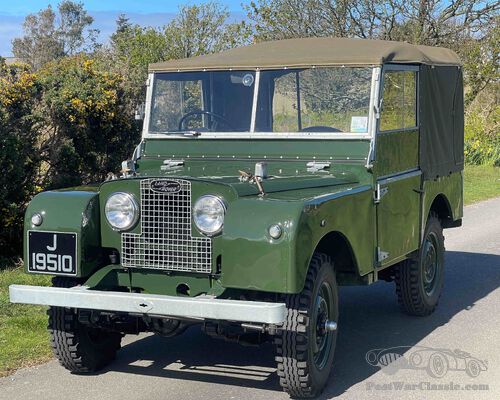
1952 Land Rover Series 1
Technische Daten:Marke und Modell: Land Rover Series !Baujahr: 1952Kennzeichen: Jersey-Zulassung
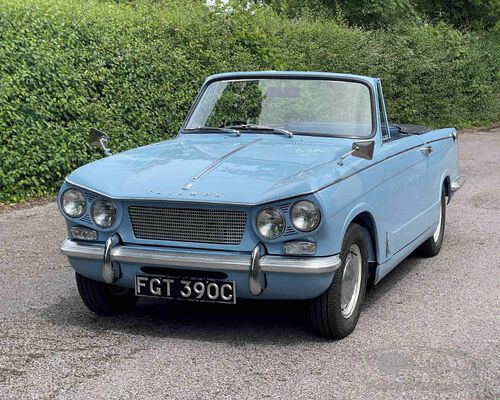
Triumph Vitesse 6 Convertible
Technische DatenMarke & Modell: Triumph Vitesse 6 ConvertibleBaujahr: 1965Zulassung: GroßbritannienFahrgeste..
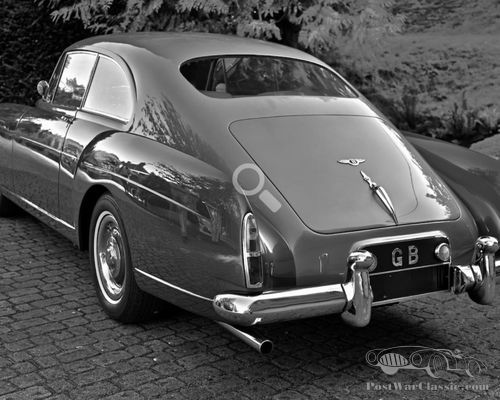
1957 Bentley S1 Fastback durch H.J. Mulliner.
1957 Bentley S1 Fastback by H.J. Mulliner.Frisch restauriertes und preisgekröntes Fahrzeug in neuwertigem Zustand. Es handelt sich um ein sp..