Das weltweite Magazin und der Marktplatz für Oldtimer-Enthusiasten – von Enthusiasten.





Der Markt; alle Post-War fahrzeuge zu verkaufen
Überblick ähnlicher Anzeigen 1971 Mini Cooper S
-

1972 Jensen Healey Convertible | Historics Auctioneers | Nov 26, 2022
The Jensen Healey was designed in a joint venture by Donald Healey and William Towns with Jensen Motors and it was hoped that Healey could help to contribute the sense of style that made the Austin Healey a hit. Jensen looked to Lotus for the power plant as they had a new, untested engine available, thus all Jensen Healey models came equipped with .. -
1973 MG B GT V8 | Historics Auctioneers | Nov 26, 2022
The MGB was first introduced in May 1962 as a direct replacement for the MGA. Performance was brisk with power supplied by a 1798cc four-cylinder iron block engine set within a monocoque lightweight bodyshell with crumple zones incorporated. October 1965 saw the introduction of the GT which was based on the already popular roadster. Designed by Pin.. -
1973 MG B Roadster | Historics Auctioneers | Nov 26, 2022
Conceived in the late 1950s and launched in 1962, the MGB would turn out to be one of the most successful sports cars of all time. Attractively styled, cheap to run and easily maintained by the home mechanic, the 'B' carried on MG's traditional role of providing affordable, sports car motoring for the ordinary enthusiast. The MGB was mechanically s.. -
1970 Jaguar XJ6 Series I | Historics Auctioneers | Nov 26, 2022
The Jaguar XJ6, launched in September 1968, was the culmination of several years of development and a motor car specifically designed to streamline the, extensive and somewhat confusing, portfolio of models offered by Jaguar at that time. It was also the last model that Sir Williams Lyons had a ‘hands on’ input into the design. The new car offered .. -
1978 Porsche 911 SC / RS Inspired Lightweight | Historics Auctioneers | Nov 26, 2022
The Porsche 911 is the flagship car of the German manufacturer. It has a distinctive design, rear-engined, with independent rear suspension, an evolution of the swing axle on the Porsche 356. Since its introduction in 1963, the 911 has undergone continuous development although the basic concept has remained little changed. Throughout its lifetime, .. -
1974 Jensen Interceptor Mk. III | Historics Auctioneers | Nov 26, 2022
The Jensen Interceptor was launched in 1966 and all steel bodyshell broke away from the company's traditional method of construction that used GRP (Glass Reinforced Plastic). Designed by Carrozzeria Touring, the early cars were built by Vignale before production eventually was carried out at the Jensen works in West Bromwich. Power was delivered by.. -
1972 Jaguar E-Type Series III 2+2 Fixedhead Coupé | Historics Auctioneers | Nov 26, 2022
By the mid-1960s, the Jaguar E-Type was appealing to the man with a young family, but they were restricted by the size of the current Jaguar E-Type Coupé and its open topped sibling. This prompted Jaguar to offer a third option in the form of a 2+2 Coupé. By adding nine inches to the wheelbase and two inches in height, it was then possible to fit a.. -
1971 Datsun 240Z | Historics Auctioneers | Nov 26, 2022
It soon became apparent during its creation, that the Datsun 240Z represented all the requirements of sports-minded drivers by fulfilling their desires for superb styling, power and safety whilst providing them with the most thrilling and enjoyable ride available in any car at that time. Reporting 151bhp and 146lb/ft of torque at just 4,400rpm, Car.. -
1971 Mercedes-Benz 230 Limousine | Historics Auctioneers | Nov 26, 2022
The name Limousine or Limo, as they are popularly known, originated from the Limousin region in central France from a type of hood worn by the population that resembled the covering for a carriage. Later, it was known as the cover for the driver on an automobile, while today, it is known as a luxury vehicle that has a longer frame and wheelbase to .. -
1974 Jensen Interceptor Mk. III | Historics Auctioneers | Nov 26, 2022
It’s not often a car company is started with the help of a movie star but when in 1935 Clark Gable sent the Jensen brothers a new Ford chassis to fit one of their sleek four-seat bodies to, as they say the rest was history. After the war Jensen resumed low volume car production but prospered as the coachbuilder for Austin Healey and others until in..


Ausgewählt
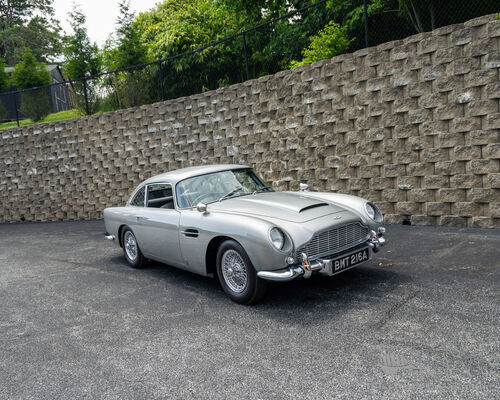
2020 Aston Martin DB5 Goldfinger Continuation
Angeboten bei RM Sotheby's, The Monterey Auction, 13.–15. August 2026. Schätzpreis: 1.000.000–1.500.000 USDEines von ledi..
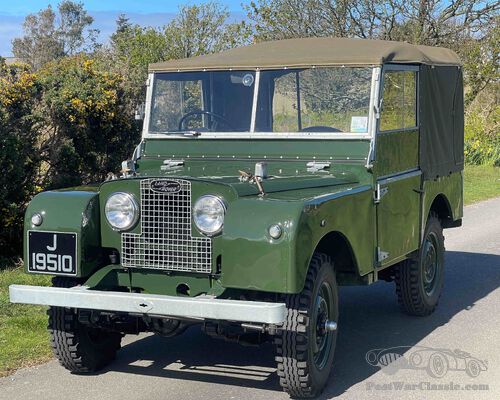
1952 Land Rover Series 1
Technische Daten:Marke und Modell: Land Rover Series !Baujahr: 1952Kennzeichen: Jersey-Zulassung
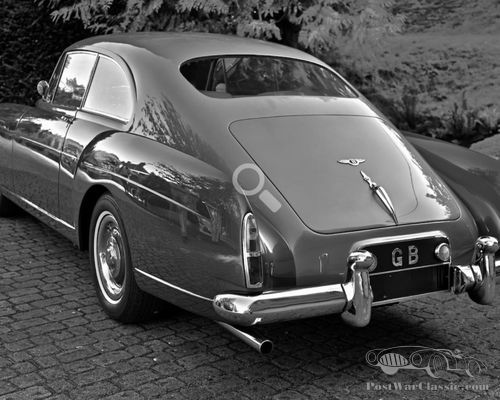
1957 Bentley S1 Fastback durch H.J. Mulliner.
1957 Bentley S1 Fastback by H.J. Mulliner.Frisch restauriertes und preisgekröntes Fahrzeug in neuwertigem Zustand. Es handelt sich um ein sp..