Das weltweite Magazin und der Marktplatz für Oldtimer-Enthusiasten – von Enthusiasten.





Der Markt; alle Post-War fahrzeuge zu verkaufen
Überblick ähnlicher Anzeigen Aston Martin DB4 Series II
-

1960 Ferrari 250 GT SWB Berlinetta by Scaglietti | RM Sotheby's | Cliveden House
To Be OFFERED AT AUCTION at RM Sothebys' Cliveden House event, 12 June 2024. £5,000,000 - £6,000,000 GBP The 34th of 165 examples built of the legendary Ferrari 250 GT SWB Berlinetta Subject to a full restoration by Carrozzeria Autosport in 2009 Certified by Ferrari Classiche in 2013; retains its matching-numbers chassi.. -
Porsche 356 C 1600 1963
int.code: RDS00280- Registration ASI GOLD PLATE "Certificate of Historical Relevance".- FIVA “ The FIVA Certificate of Identity allows participation in the FIVA national calendar events and to certify the qualities of the vehicle ”. • Financing Possibilities.We offer logistics and home delivery service. .. -
1968 Jaguar 340 To Mk. II 3.8 Specification | Historic Auctioneers | Farnborough International | 11th May 2024
The Jaguar Mk. II perhaps needs very little introduction, especially to the Jaguar enthusiast or follower. Introduced in 1959 in 2.4 litre form, the Mk. II Saloon was somewhat underpowered and soon gained the larger 3.4 litre unit. As if this was not enough, the engine further gained capacity with growth to 3.8 litres that produced a healthy 220bhp.. -
1966 Volvo 131 Amazon | Historic Auctioneers | Farnborough International | 11th May 2024
Introduced to the UK in November 1958, Volvo's highly successful 120-series 'Amazon' was built around a steel-fabricated monocoque. Equipped with independent coil and wishbone front suspension and a Panhard rod located rear axle, it quickly acquired a reputation for toughness, longevity, and reliability. Powered by a choice of torquey four-cylinder.. -
1966 Volkswagen 15 Window Deluxe | Historic Auctioneers | Farnborough International | 11th May 2024
The Volkswagen Type 2 was introduced in 1950 as a multi-variant utility vehicle, known as the Transporter, Kombi or Microbus (depending on body type). The first generation of these versatile vehicles (named the T1) was produced with distinctive split-screens from 1950 until 1967. Only two models were originally offered, the Kombi and the Commercial.. -
1995 Aston Martin DB7 i6 Coupé | Historic Auctioneers | Farnborough International | 11th May 2024
Introduced in 1993 to the public, the handsome new DB7 was Aston Martin's first six-cylinder model since production of the DB6 Mk. II had finished in 1971. Styled by Ian Callum, its lines were evocative of earlier Aston Martin models and elements of the DB4/5/6 could be seen in its design. Arguably one of the most attractive looking cars ever produ.. -
1960 Jaguar XK150 Coupé | Historic Auctioneers | Farnborough International | 11th May 2024
The Jaguar XK150 was manufactured between 1957 and 1961 and despite having a family resemblance to the XK120 and XK140, the XK150 was radically modernised. A one-piece windscreen replaced the split screen and the wing line no longer dropped as much over the doors. The bonnet was widened, opened down to the wings and on the roadster, the bulkhead wa.. -
1960 Facel Vega HK500 | Historic Auctioneers | Farnborough International | 11th May 2024
Founded by Jean Daninos in 1939, Forges et Ateliers de Construction d'Eure-et-Loir (FACEL) originally specialised in the production of aircraft materials. After World War II, Facel distributed car bodies to Panhard, Simca and Ford France. It would not be until 1954 that Facel began to manufacture its own vehicle, the Facel Vega FV, unveiled at the .. -
1969 Mercedes-Benz 280 SL Pagoda | Historic Auctioneers | Farnborough International | 11th May 2024
The Mercedes-Benz W113 SL was developed under the auspices of Mercedes-Benz Technical Director Fritz Nallinger, Chief Engineer Rudolf Uhlenhaut and Head of Styling, Friedrich Geiger. The lead designers were Paul Bracq and Béla Barényi who created its distinctive, patented, slightly concave hardtop which inspired the 'Pagoda' nickname. The model was.. -
1995 Aston Martin DB7 | Historic Auctioneers | Farnborough International | 11th May 2024
Introduced in 1993 to the public, the handsome new DB7 was Aston Martin's first six-cylinder model since production of the DB6 Mk. II had finished in 1971. Styled by Ian Callum, its lines were evocative of earlier Aston Martin models and elements of the DB4/5/6 could be seen in its design. Arguably one of the nicest looking cars ever produced by As..





Ausgewählt
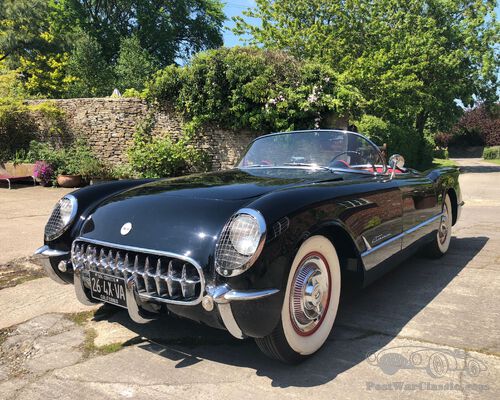
1954 Corvette C1 - SUPER RARE Black!!
Looking for her next lover, my classy 1954 Corvette C1. She's a beautiful sculpture. Never have i had so many adoring comments as when drivi..
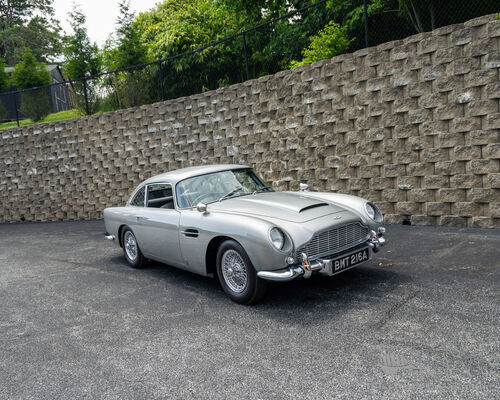
2020 Aston Martin DB5 Goldfinger Continuation
Angeboten bei RM Sotheby's, The Monterey Auction, 13.–15. August 2026. Schätzpreis: 1.000.000–1.500.000 USDEines von ledi..
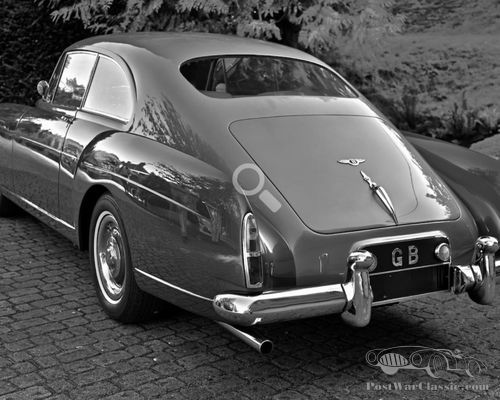
1957 Bentley S1 Fastback durch H.J. Mulliner.
1957 Bentley S1 Fastback by H.J. Mulliner.Frisch restauriertes und preisgekröntes Fahrzeug in neuwertigem Zustand. Es handelt sich um ein sp..