Das weltweite Magazin und der Marktplatz für Oldtimer-Enthusiasten – von Enthusiasten.
Das weltweite Magazin und der Marktplatz für Oldtimer-Enthusiasten – von Enthusiasten.


Auswahl treffen
- Autos
-
Marke >>
-
Baujahr >>
-
-
Kategorie >>
-
Länder >>
- Motorräder
-
Baujahr >>
-
-
Standort >>
- Teile
-
Automarke >>
-
Hersteller >>
-
Kategorie >>
-
Länder



Der Markt; alle Post-War fahrzeuge zu verkaufen
Überblick ähnlicher Anzeigen 1948 Jaguar Mk IV 3½ litre
-

1973 Jaguar E-Type Series III Roadster | Historics Auctioneers
The E-Type would be one of the last great sports cars developed directly from a successful competition ancestor. Just as in the D-Type, a monocoque tub formed the main body/chassis structure for the E-Type while a tubular space frame extended forwards to support the engine. As the E-Type evolved so did customers needs, Jaguar had developed the twel..1973JaguarE-Type Series III RoadsterVERKAUFT -
1957 Jaguar XK140 SE Roadster | Historics Auctioneers
Unveiled at the 1954 London Motor Show in October 1954 the Jaguar XK140 included numerous improvements over its predecessor, the landmark XK120. The styling was enhanced by a revised grille and larger bumpers along with new rear lights, which now incorporated the indicators. The power unit remained Jaguar's well-tried, 3.4-litre, twin-cam six, whic..1957JaguarXK140 SE RoadsterVERKAUFT -
1973 Jaguar E-Type Series III Roadster | Historics Auctioneers
The E-Type Series III was introduced in 1971, with a new 5.3 litre, V12 engine, uprated brakes and standard power steering. Optionally, an automatic transmission, wire wheels and air conditioning were available. The brand new V12 engine came with four Zenith carburettors and was claimed to produce 272bhp, more torque, and a 0-60mph acceleration of ..1973JaguarE-Type Series III RoadsterVERKAUFT -
1979 Jaguar SS100 by Suffolk Engineering | Historics Auctioneers
The SS100 was built between 1936 and 1940 by SS Cars Ltd of Coventry, England. The nomenclature was to reflect the theoretical 100mph maximum speed and once approved by Sir William Lyons, the name 'Jaguar' was given to a new saloon version in 1936. Widely considered to be one of the most aesthetically pleasing Jaguar cars ever built, it is also one..1979JaguarSS100 by Suffolk EngineeringVERKAUFT -
1962 Jaguar E-Type Series I Fixedhead Coupé (3.8 litre) | Historics Auctioneers
2021 marks the 60th anniversary of the iconic Jaguar E-Type. Launched at the Geneva Motor Show in 1961 the car was nothing short of a revelation. The visionary design from Malcolm Sayer was based on Jaguar’s Le Mans winning D-Type racing car and combined beauty, high performance, and competitive pricing. This new model featured disc brakes, rack an..1962JaguarE-Type Series I Fixedhead Coupé (3.8 litre)VERKAUFT -
1954 Jaguar XK120 Roadster ‘Fast road’ | Historics Auctioneers
If it were me, I’d want my engine and gearbox built by Guy Broad. One of the unassailable leaders in the XK field. Indeed, any car with a service history or works undertaken by this company will certainly command a premium. It is little surprise that this company has formed part of the development of these cars over the years and significant paperw..1954JaguarXK120 Roadster ‘Fast road’VERKAUFT -
1970 Jaguar E-Type Series II Roadster | Historics Auctioneers
The Jaguar E-Type was initially designed and shown to the public as a grand tourer in two-seater coupé form and as a convertible roadster. The 2+2 version with a lengthened wheelbase was released several years later. The Museum of Modern Art recognised the significance of the Jaguar E-Type's design in 1996 by adding a blue roadster to its permanent..1970JaguarE-Type Series II RoadsterVERKAUFT -
1965 Jaguar S-Type 3.8 | Historics Auctioneers
The Jaguar Mk. II was a medium size saloon built from 1959 to 1969 as a successor to the 2.4 and 3.4 litre models which were manufactured between 1957 and 1959. It was a handsome, powerful and good handling saloon which was offered with a choice of three six-cylinder twin cam engines; 2.4 litre, 3.4 litre or 3.8 litre. After the appreciation of the..1965JaguarS-Type 3.8VERKAUFT -
1958 Jaguar Type C Replica, by Heritage, prepared byTrevor William Racing | LeBolide Auction | Ending July 5, 2021 - 12.30
A replica of the legendary Jaguar Type C that won Le Mans in 1953Registered in EnglandSerial number: 12523311803Engine: 4235 cm3, 6 cylinderTransmission: Manual, 5 speedLocation: Tours, FranceEstimate: 80,000 - 100,000 euros History:To say that the Jagua..1958JaguarCVERKAUFTStandort: Frankreich -
1963 Jaguar E-Type 'Lightweight' Replica | Bonhams Goodwood Festival of Speed Sale
*Left-hand drive export model *Built by marque specialist Rob Beere in 1996 *Raced circa 1996-2001 *Present ownership since 2001 *FIA papers applied for (see text) Manufactured on 3 July 1963, left-hand drive chassis number '879769' was despatched to the famous German Jaguar dealer and racer, Peter Lindner. The E-Type found its way home i..1963JaguarE-Type 'Lightweight' ReplicaVERKAUFT


Ausgewählt
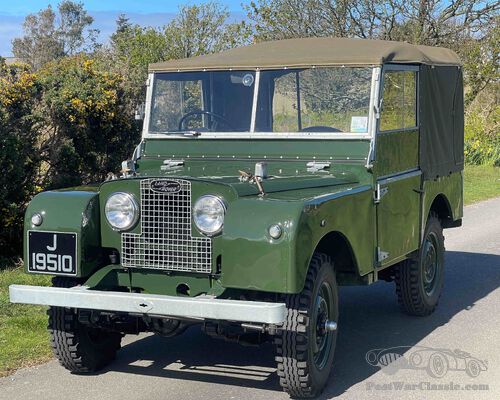
1952 Land Rover Series 1
Technische Daten:Marke und Modell: Land Rover Series !Baujahr: 1952Kennzeichen: Jersey-Zulassung
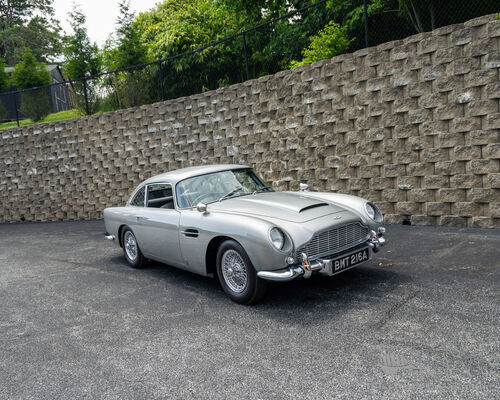
2020 Aston Martin DB5 Goldfinger Continuation
Angeboten bei RM Sotheby's, The Monterey Auction, 13.–15. August 2026. Schätzpreis: 1.000.000–1.500.000 USDEines von ledi..
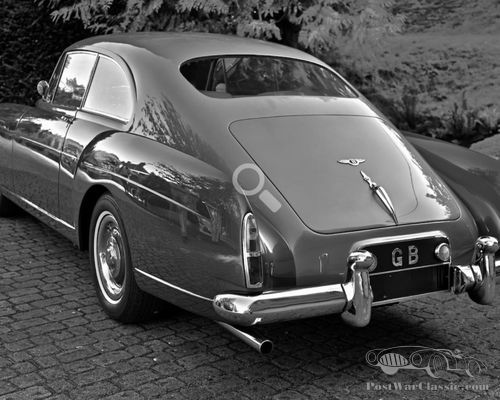
1957 Bentley S1 Fastback durch H.J. Mulliner.
1957 Bentley S1 Fastback by H.J. Mulliner.Frisch restauriertes und preisgekröntes Fahrzeug in neuwertigem Zustand. Es handelt sich um ein sp..