Das weltweite Magazin und der Marktplatz für Oldtimer-Enthusiasten – von Enthusiasten.
Das weltweite Magazin und der Marktplatz für Oldtimer-Enthusiasten – von Enthusiasten.


Auswahl treffen
- Autos
-
Marke >>
-
Baujahr >>
-
-
Kategorie >>
-
Länder >>
- Motorräder
-
Baujahr >>
-
-
Standort >>
- Teile
-
Automarke >>
-
Hersteller >>
-
Kategorie >>
-
Länder


Der Markt; alle Post-War fahrzeuge zu verkaufen
Überblick ähnlicher Anzeigen 1948 Jaguar Mk IV 3½ litre
-

1957 Jaguar XKSS Continuation | Pebble Beach Auction | Gooding & Company
Having dominated international sports car racing during the 1950s with five victories at the 24 Hours of Le Mans alone, Jaguar stunned the world when it announced a temporary hiatus from motor racing in October 1956. While the then-current D-Type was thoroughly sorted, tested, and reliable after three hard-fought racing seasons, upcoming regulat..1957JaguarXKSS ContinuationVERKAUFT -
1955 Jaguar D-Type Continuation | Pebble Beach Auction | Gooding & Company
After winning the grueling 24 Hours of Le Mans outright in 1951 and 1953 with its XK120-derived C-Type sports racers, Jaguar upped the ante with its successor, the brilliant new D-Type, in 1954. Setting entirely new standards with its cutting-edge competition engineering and stunning performance, the D-Type continues to captivate legions of coll..1955JaguarD-Type ContinuationVERKAUFT -
1960 Jaguar MKII 3.8 Litre | Hyman LTD
In 1959, Jaguar substantially updated its successful mid-sized 2.4/3.4-litre sports saloons, renaming the line with the simple moniker: “Mark II.” The unmistakable rounded styling got a slight facelift, resulting in a larger greenhouse and more delicate, chrome-trimmed window frames that gave it a lighter, airier appearance. Most important to Jagua..1960JaguarMKII 3.8 LitreVERKAUFT -
1958 Jaguar XK150 Fixed Head Coupe | Broad Arrow Auctions | August 18, 2022
Highlights“Special Equipment” version with special “B” type cylinder head, chrome wire wheels with “knock-off” hubs, dual exhaust, and windshield washersMatching numbers 3.4-liter DOHC inline six-cylinder “SE” engine, 210 hp, twin SU H.D.6 carburetorsFirst Jaguar production car with disc brakes1958JaguarXK150VERKAUFTStandort: Vereinigte Staaten -
1967JaguarE-Type Series I 4.2 RoadsterVERKAUFT
-
1948FordSuper DeLuxe Station WagonVERKAUFT
-
1947Alfa Romeo6C 2500S CabrioletVERKAUFT
-
1991 Jaguar XJR-15 | Broad Arrow Auctions | August 18, 2022
HighlightsUnraced condition with just under 700 milesUpgraded air conditioning and front / rear axle lift added6.0-liter, 450 hp mid-engine V12 mated to a five-speed manual transmissionReady to enjoy with over $21,000 of work since July 2021 Chassis No. XJR-15 0..1991JaguarXJR-15VERKAUFTStandort: Vereinigte Staaten


Ausgewählt
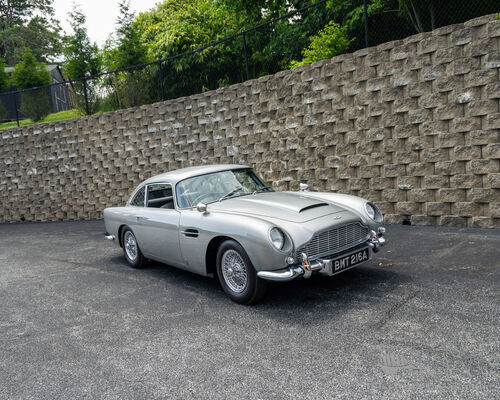
2020 Aston Martin DB5 Goldfinger Continuation | RM Sotheby's | The Monterey Auction
To Be OFFERED AT AUCTION at RM Sothebys' The Monterey Auction event, 13 - 15 August 2026. $1,000,000 - $1,500,000 USD One of 25 examples co..
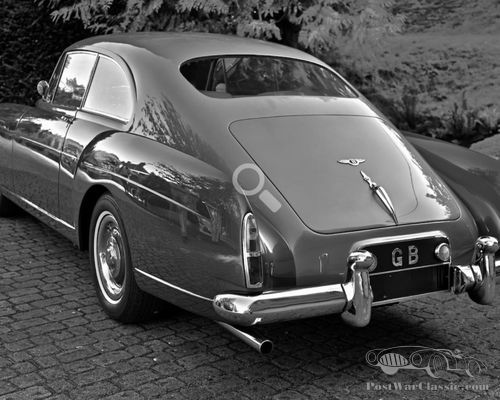
1957 Bentley S1 Fastback by H.J. Mulliner.
1957 Bentley S1 Fastback by H.J. Mulliner.A freshly restored award winning car in like new condition. A later car with Power assited steerin..