Das weltweite Magazin und der Marktplatz für Oldtimer-Enthusiasten – von Enthusiasten.
Das weltweite Magazin und der Marktplatz für Oldtimer-Enthusiasten – von Enthusiasten.


Auswahl treffen
- Autos
-
Marke >>
-
Baujahr >>
-
-
Kategorie >>
-
Länder >>
- Motorräder
-
Baujahr >>
-
-
Standort >>
- Teile
-
Automarke >>
-
Hersteller >>
-
Kategorie >>
-
Länder



Der Markt; alle Post-War fahrzeuge zu verkaufen
Überblick ähnlicher Anzeigen 1948 Jaguar Mk IV 3½ litre
-

1974 Jaguar E-Type Series III Roadster | Historics Auctioneers | Nov 26, 2022
The Jaguar E-Type was ten years old and in need of a new lease of life. History repeated itself when Jaguar debuted its robust V12 engine in a sportscar instead of the saloon for which it was designed. Despite its sportscar heritage, Jaguar depended on saloon vehicles for its survival and had developed the twelve-cylinder engine to power them with ..1974JaguarE-Type Series III RoadsterVERKAUFT -
1964 Jaguar E-Type Series I Roadster (3.8 Litre) | Historics Auctioneers | Nov 26, 2022
Introduced in 1961, the Jaguar E-Type caused a sensation when it appeared with its instantly classic lines and 150mph top speed. While, inevitably, the car's stupendous straight-line performance and gorgeous looks grabbed the headlines, there was a lot more to the E-Type beneath the skin. The newcomer's design owed much to that of the racing D-Type..1964JaguarE-Type Series I Roadster (3.8 Litre)VERKAUFT -
2009 Jaguar X-Type Estate Ex-HM Queen Elizabeth II | Historics Auctioneers | Nov 26, 2022
The Jaguar X-Type is a front-engine, all-wheel/front-wheel drive compact executive car manufactured and marketed from 2001 to 2009. In addition to offering Jaguar's first estate in series production, the X-Type would ultimately introduce its first diesel engine, four-cylinder engine and front-wheel drive configuration. The X-Type was developed dur..2009JaguarX-Type Estate Ex-HM Queen Elizabeth IIVERKAUFT -
1990 Jaguar XJS Convertible | Historics Auctioneers | Nov 26, 2022
In 1975, the Jaguar E-Type finally gave way to an all new and more efficient Jaguar, the Jaguar XJS. This new luxury grand tourer, although never quite having the same sporting image as the E-Type, was actually more aerodynamic with the final example leaving the production line on 4th April 1996; at that stage 115,413 units had been manufactured du..1990JaguarXJS ConvertibleVERKAUFT -
2003 Jaguar XK8 Convertible | Historics Auctioneers | Nov 26, 2022
Jaguar was founded as the Swallow Sidecar Company by Sir William Lyons in 1922, originally making motorcycle sidecars before developing passenger cars. The name was changed to Jaguar after World War II to avoid the unfavourable connotations of the SS initials. Sale to BMC happened in 1966, which in 1968 merged with Leyland Motor Corporation and bec..2003JaguarXK8 ConvertibleVERKAUFT -
1979 Jaguar XJ6 Series II (4.2 Litre) | Historics Auctioneers | Nov 26, 2022
The first XJ was launched in 1968 a designation which has been used for successive Jaguar flagship models ever since and was also the last Jaguar saloon to have had the input of Sir William Lyons, the company's founder. The XJ6, using 2.8 litre and 4.2 litre straight six-cylinder versions of Jaguar's renowned XK engine, replaced most of Jaguar's sa..1979JaguarXJ6 Series II (4.2 Litre)VERKAUFT -
1965 Jaguar Mk. II (3.4 Litre) | Historics Auctioneers | Nov 26, 2022
The Jaguar Mk. II was built from 1959 to 1969 as a successor to the 2.4 and 3.4 litre models which were manufactured between 1957 and 1959. It was a handsome, powerful and good handling saloon which was offered with a choice of three six-cylinder twin cam engines; 2.4 litre, 3.4 litre or 3.8 litre. After the appreciation of the Mk. I, Jaguar's succ..1965JaguarMk. II (3.4 Litre)VERKAUFT -
Wunderschönes Jaguar XK 150 Fixed Head Coupé von 1957
Ein schönes XK 150 Fixed Head Coupé 3,4 Liter von 1957 mit British Heritage Certificate Erste Auslieferung nach Kalifornien bis 1988, dann Import nach Belgien. Das Auto wurde von einem Jaguar-Spezialisten restauriert und komplett zerlegt, der versuchte, so viel wie möglich original zu erhalten. Der Motor wurde von Retro Car in Namur überh..1957JaguarXK 150 Fixed Head CoupéVERKAUFTStandort: Belgien -
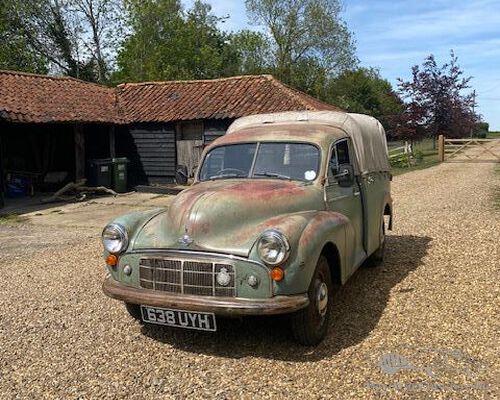
1948 Morris 8/40 Pickup
Angeboten wird ein Morris 8/40 Pickup aus dem Jahr 1948. Dieser Morris Pickup ist sofort einsatzbereit. Die Bremsanlage wurde vor dem letzten Besuch beim TÜV vollständig revidiert. Eine Deutsche H-Zulassung und TÜV bis 09/24 sind vorhanden. In diesem Morris ist ein 4 Zylinder Motor mit 918ccm verba..1948Morris8/40 PickupVERKAUFTStandort: Deutschland -
1990 Jaguar XJS 6.0 Litre V12 Convertible
1990 Jaguar XJS 6.0 Litre V12 ConvertibleVin Number: SAJJNADW3DB172069Registration: E19COBOver £100,000 spent on a fastidious restoration. The brief was to remanufacture an XJS convertible to as new whilst upgrading the engine to 6 litres & around 400hp. This car has covered a scant 1800 miles since build & is in s..1990JaguarXJSVERKAUFTStandort: Großbritannien


Ausgewählt
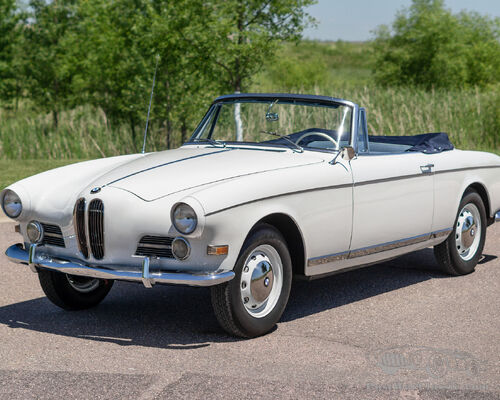
1957 BMW 503 Cabriolet (V8) – 1 von 13 für den US-Markt gebaut – #Matching Exemplar
1957 BMW 503 Cabriolet Serie 1Originaler Aluminium-V8 # MatchingOriginale Aluminiumkarosserie mit Werksprägungen1 von..